
Community & Impact
Langar logistics: lessons in running anything at scale
Behind every shared meal is a quiet choreography of planning, listening and showing up.
GrowSikh Editorial Team
7 min read
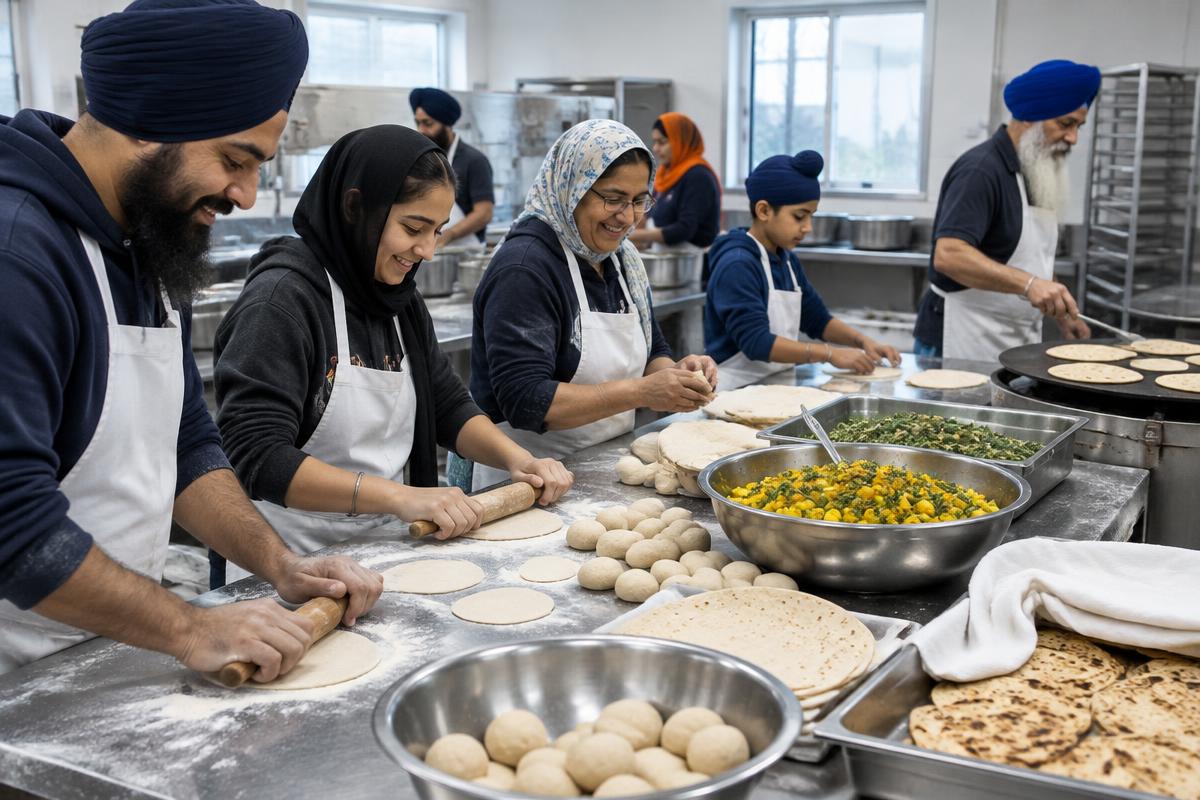
Walk into a busy langar hall and the meal may look effortless. There is food when you arrive. Someone knows where to stand. Dishes come back, tables are cleared, and the next person is welcomed. Behind that simplicity is planning that many organisations would envy.
Langar is not a business metaphor to be mined and forgotten. It is a living Sikh practice of equality and service. Still, the way volunteers keep it going offers lessons in how people work together.
A shared purpose makes decisions simpler
If the aim is to feed everyone who comes, without distinction, the question is not 'Which guest matters most?' It is 'What do we need to make sure nobody is missed?' That changes how you plan supplies, space and the flow of people.
In other settings, a clear purpose can help a team choose between competing priorities. It should be practical enough to guide a decision on a difficult day, not only look good on a wall.
The practice begins with a promise of welcome. Making that promise real involves very ordinary decisions: how food is prepared, who can get to a seat, what happens when more people arrive than expected.
It is tempting to borrow the language of efficiency and forget the spiritual and communal purpose. Better to say plainly that the planning serves the people, not the other way around.
The invisible work is still work
Ordering ingredients, cleaning equipment, training newcomers and noticing when supplies are low rarely make a photograph. They make the service possible. A reliable operation names those tasks instead of assuming somebody will quietly handle them.
It also makes it easy to join in. A new volunteer needs a task they can understand, someone to ask and permission to learn. Complexity that lives only in one person's head is a fragile system.
A newcomer can often see a problem regular volunteers have stopped noticing. Is the route to wash hands clear? Does a person know where to ask about an ingredient? Does someone explain a task without making a first-timer feel in the way?
The smoothest operation is not necessarily the one with the most instructions. It is one where people notice when another person needs a hand.
Scale requires care, not just speed
More people to serve means thinking about safety, access, dietary needs and the capacity of volunteers. When the pace rises, the point is still the person receiving the meal. Efficiency matters because it frees people to be attentive, not because it turns them into units in a queue.
Teams in any setting can ask the same question: what would make it easier to do good work without losing sight of whom the work is for?
When a system works on a busy day, it is often because someone prepared for the unglamorous possibilities: extra dishes, a late delivery, a volunteer who could not come. Planning leaves room for hospitality when the day becomes unpredictable.
That attention is transferable to any team, but the meal is not merely an example in a leadership lesson. For the people gathered around it, it is the point.
The lesson is not to turn langar into a management manual. It is to notice how much care goes into making everyone feel welcome.